Why Claude Skills Are Essential for Agents
Claude Skills is a packaging structure for teaching Claude how to perform specific tasks. Anthropic introduced this under the name Skills, and the Claude Code documentation describes a Skill as a directory containing a SKILL.md file along with any necessary scripts, references, and resources. The core idea is simple: rather than stuffing all knowledge into a single prompt, you expose only the procedures and materials the model needs at the moment it needs them.
I consider this feature significant because Skills is not just a prompt template. It's closer to a design response to problems that recur as LLM Agents scale up — context overload and unstable tool use. For an agent to work well, the model must understand the task goal, select the right tools, interpret intermediate results, and decide on the next action. Supplying every explanation all at once during this process can actually destabilize performance.
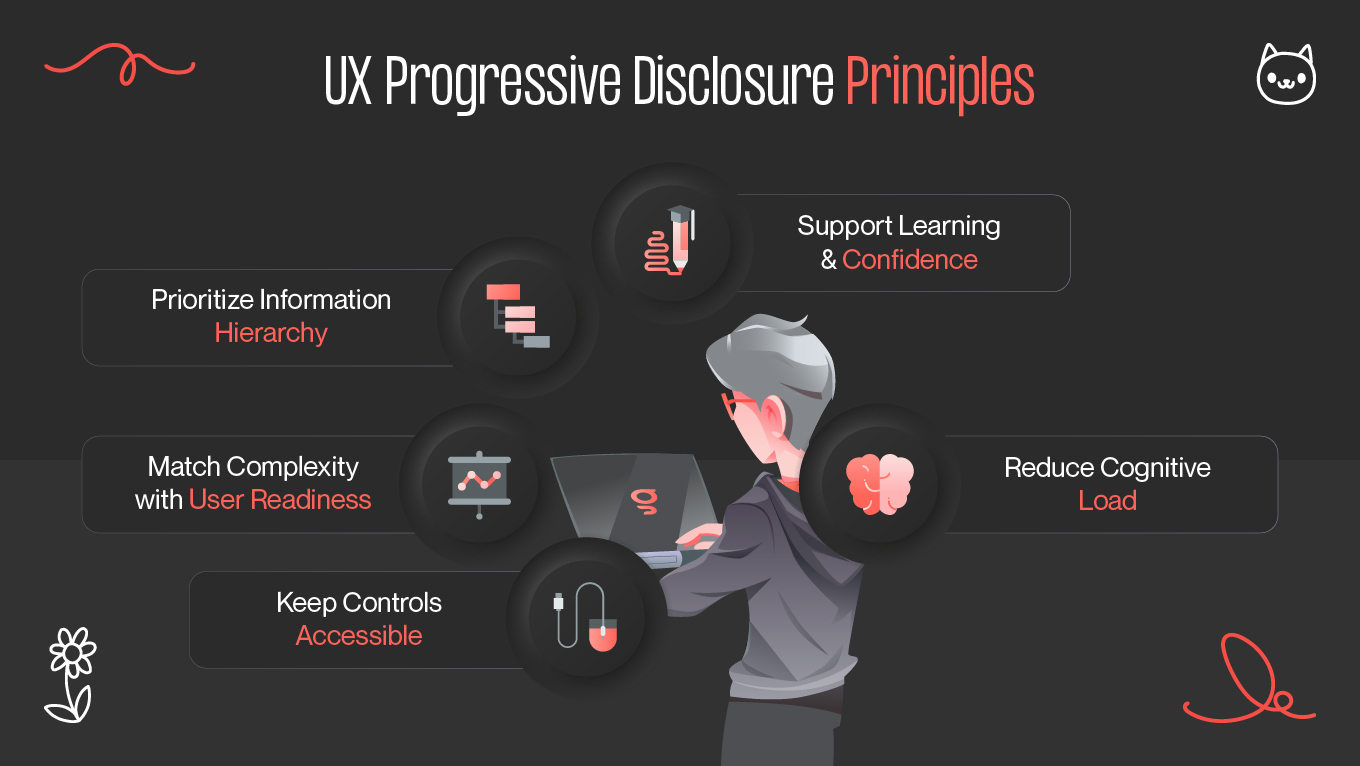
Progressive Disclosure is a design principle that reveals only the information needed, one layer at a time. Source: Gapsy Studio
Skills in One Sentence
Claude Skills is a task knowledge package — a collection of everything Claude needs to know about performing a specific task, structured so it can be loaded on demand.
For example, a Skill for generating internal company reports might contain the report format, prohibited phrases, data processing scripts, example files, and a checklist. When Claude determines that a user's request is related to this Skill, it first reads a brief description, then, if more is needed, reads the detailed files or scripts to carry out the work.
This structure mirrors how people actually learn a job. You don't load every company policy into your head before you start. You first figure out what the task is, look up the relevant documents and examples, and run the tools you need to produce a result. Skills transfers this workflow to the LLM agent side.
The Background: Progressive Disclosure
To understand Skills, you need to understand Progressive Disclosure first. Progressive Disclosure is a design principle that prevents users from seeing all information upfront, instead revealing more detail progressively at the moment it's needed. The Nielsen Norman Group describes progressive disclosure as an interaction design technique that reduces initial complexity by deferring advanced features and infrequent information.
This principle is widely used in UI design. The initial screen shows only the essential controls; advanced settings are tucked behind a collapsed section or a separate menu. Users can start on basic tasks quickly and only open additional information when they need to do something more complex.
The same problem arises with LLM agents. When you feed a model too many instructions, tool descriptions, edge-case rules, and examples all at once, the context grows long. The longer the context, the more likely the model is to miss a critical condition or be influenced by instructions irrelevant to the current task. This is why providing the right information at the right moment matters in agent design.
From this perspective, Skills can be seen as applying Progressive Disclosure to the domains of agent memory and tool use. A Skill's top-level description is short; detailed procedures and materials only unfold when needed. The model first determines which Skill is relevant, then reads the necessary files or executes the relevant scripts.
Why a Single Prompt Wasn't Enough
Early LLM usage was mostly prompt-centric. Users wrote long instruction strings, and the model produced answers within that context. For simple tasks, this is perfectly adequate. But once agents start taking on real work, the limits of a single prompt become apparent.
The first limitation is context cost. Putting all business rules and examples into the prompt every time inflates the input token count. It's not just a cost issue — it also increases the burden on the model to locate the information actually relevant to the current task.
The second limitation is reusability. Copying the same task knowledge across multiple prompts makes version management a nightmare. When a rule changes, you have to update every prompt. Skills packages task knowledge into files that can be reused.
The third limitation is execution capability. Real tasks involve mixed procedures: calculations, file conversions, data cleaning, API calls. Natural language descriptions alone can't reliably produce consistent results. By embedding scripts inside a Skill, the model doesn't just read an explanation — it has access to the actual execution steps it needs.
From Tool Use to Skills
Skills didn't appear out of nowhere as an isolated feature; it sits on a trajectory aimed at turning LLMs into agents. That progression runs roughly: prompts → Tool Use → MCP → Skills.
Anthropic provides tool use, which lets Claude call external tools. Rather than only generating text, the model selects a defined tool, constructs the input, and invokes it. Tools can include things like weather APIs, database queries, and code executors.
Tool Use expanded what agents could do. But as the number of tools grows, a new problem emerges. The model needs to know which tool to use and when, and it needs to understand the procedures before and after each call. Including full descriptions of all tools in the context brings back context overload.
Anthropic then released the Model Context Protocol to standardize how AI applications connect to external systems. MCP is primarily about standardizing connectivity. Skills is primarily about packaging the method for performing a specific task.
To summarize: Tool Use gave the model the ability to act. MCP organized how tools and data sources are connected. Skills bundles together, at the task level, which tools and resources to use and in what sequence.
The Structure of a Skill
The Skills documentation for Claude Code describes a Skill as a directory structure. A single Skill is typically organized around a SKILL.md file. This file contains the Skill's name, description, usage conditions, and task procedures. When needed, scripts, templates, reference documents, and example files are placed alongside it in the same directory.
The key point is that SKILL.md is not just a long manual. The Skill description must be clear enough that the model can decide when to use it, while not front-loading every detail and wasting context.
A Skill typically contains:
- When to use this Skill
- The order in which to carry out the task
- What the required inputs and output formats are
- What scripts or files are available
- What conditions to check when verifying results
This structure is analogous to handing an agent an operations manual — except instead of opening the entire manual upfront, you give it the table of contents and a summary first, and let it read only the sections it actually needs.
Why Multiple Tool Calls Matter
When an agent handles something complex, the work rarely completes in a single tool call. Consider generating a PDF report. The agent needs to parse the user's requirements, read the source data, compute statistics, generate charts, assemble the document, and finally validate the output file.
This process comprises multiple sequential tool calls:
- List files
- Read source data
- Run data cleaning script
- Generate chart
- Apply document template
- Save output file
- Validate the artifact
As tool calls multiply, the agent needs to know where it is in the overall procedure at each step. A list of tools alone isn't enough. It needs the task sequence, the meaning of intermediate results, and a recovery strategy when something fails.
Skills is well suited to encoding these multi-step procedures. A Skill describes not the tools themselves, but how to chain those tools together to complete a piece of work. In this sense, Skills doesn't replace Tool Use — it's the higher-level layer that becomes increasingly necessary as the number of Tool Calls grows.
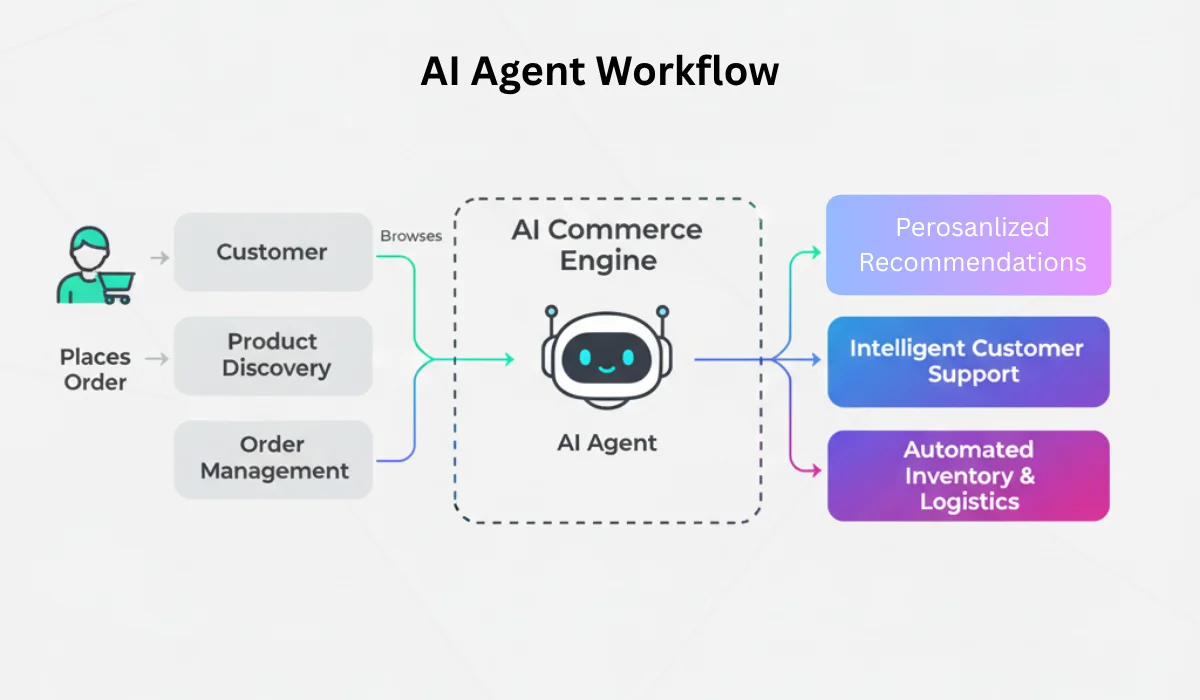
Agent tasks consist of multiple tool calls and validation steps. Source: Softude
How Skills Differs from RAG
It's easy to conflate Skills with RAG. Both retrieve information from external sources. But the purposes are different.
RAG is typically used to answer questions by searching for relevant documents and placing them into the context. The core is knowledge retrieval. When a user asks about a specific regulation, product detail, or document content, the relevant passage is found and fed to the model.
Skills encodes how to perform a task. The core is procedure and execution — defining which files to read, which scripts to run, and what format the output should take.
Simply put: RAG addresses "what do you need to know," while Skills addresses "what do you need to do." In practice, the two can be used together. A Skill provides the task procedure, while RAG retrieves the supporting documents needed along the way.
How Skills Differs from the System Prompt
The system prompt is the right place to define the model's overall behavioral principles — security rules, response tone, prohibited actions, and the application's role at large. But loading every task-specific procedure into the system prompt makes it unwieldy.
Skills separates task knowledge out. You can have a report-writing Skill, a data-cleaning Skill, a customer-support Skill, and a code-review Skill, each independent. The model selects only the Skill that matches the user's request.
This distinction matters operationally. System prompts are hard to change frequently and have broad impact. Skills can be managed at the individual task level, making them easier to revise and experiment with. It also becomes feasible for different team members within an organization to own and maintain specific Skills.
Where Anthropic's Design Philosophy Shows
In Building effective agents, Anthropic emphasizes a preference for simple, composable patterns over complex frameworks. The post distinguishes between workflows and agents, and describes patterns where a model uses tools, receives feedback, and iterates.
Skills connects directly to this thinking. Rather than packing everything into a massive prompt or a complex orchestrator, you decompose task knowledge into small units and load them on demand. This makes agent systems more observable, more maintainable, and more reusable.
The underlying philosophy is that you don't treat the model as a single omniscient function. The model excels at judgment and generation, but it doesn't need to carry every procedure and resource in memory at all times. Knowledge lives externally, organized and ready; the model reads and executes it as the situation calls for it.
A Concrete Example
Suppose you're building a Skill that automatically polishes blog posts. It might have a structure like this:
blog-editor/
  SKILL.md
  style-guide.md
  banned-words.md
  examples/
    good-post.md
    bad-post.md
  scripts/
    check-links.py
SKILL.md describes when to use the Skill and the overall procedure. style-guide.md contains writing style rules. banned-words.md lists phrases to avoid. check-links.py verifies that every link in the post is live.
When the user asks, "Polish this post in my blog's tone," Claude identifies this Skill as relevant. It reads SKILL.md first, then consults the style guide and examples as needed, and finally runs the link-checking script to validate the output.
The key point is that the Skill isn't just a few saved response lines. It packages the judgment criteria, the procedure, the reference materials, and the verification method together.
Principles for Building Good Skills
The most important principle when building a Skill is to keep it small. If a single Skill owns too many jobs, it starts to look like a monolithic prompt all over again. A Skill should be scoped clearly enough that the model can confidently determine, "this task calls for this Skill."
The second principle is to separate description from supporting material. SKILL.md should contain usage conditions and core steps, kept concise. Long examples, large documents, and scripts belong in separate files. This is what preserves the advantage of Progressive Disclosure.
The third principle is to include a verification step. Agents make mistakes during execution. Documenting what to check after producing a result — whether the file was created, whether the output format is correct, whether any fields are missing, whether links are valid — reduces silent failures.
The fourth principle is to embed tool calls within a defined procedure. "Use tools as needed" is less reliable than "first verify the input file, then run the cleaning script, and if it fails, read the error log." Agents behave more predictably when given an appropriate procedure rather than unconstrained freedom.
The Problem Skills Is Designed to Solve
The problem Skills addresses is not a missing feature — it's an operational one. When you put an agent into real work, these problems repeat:
- Prompts keep getting longer.
- Task knowledge gets copied across multiple places.
- Tool selection becomes unstable as the number of tools grows.
- Recovery from intermediate failures is fragile.
- Result validation depends entirely on humans.
Skills reduces these problems through task-level packaging. Task knowledge is consolidated in one place, exposed only when relevant, and delivered together with tool usage procedures and verification criteria. That's why Skills is less a convenience feature and more a design pattern for operating agents.
Summary
The core of Claude Skills is progressive disclosure. Instead of giving the model all information at once, the Skill description lets it determine relevance, then load the detailed materials and scripts it needs, step by step.
This philosophy mirrors Progressive Disclosure in UI design: minimize what's shown upfront, and unfold complexity only when it's called for. In LLM agents, this approach has direct implications for context management, tool selection, and multi-step task execution.
If Tool Use gave the model the capacity to act, Skills provides the structure to organize those actions at the task level. If MCP standardized how to connect to external systems, Skills organizes how to use those connected tools and resources to produce results.
Ultimately, Skills is not a feature for making agents bigger — it's a structure for keeping them manageable as they grow. That's what makes Claude Skills more than a collection of prompt snippets, and why it represents a meaningful step in the evolution of agent design.